
Park Brokerage Services | Monthly Industry & Investment Update
July 2026 RV Park & Campground Market Snapshot
Executive Market Overview
July 2026 reflected continued investor interest in established outdoor hospitality properties, particularly parks near major recreational destinations and waterfront locations. At the same time, newly released RV shipment figures showed continued softness in the broader RV manufacturing market.
For owners and investors, the distinction between existing operating income, location-driven demand, and potential future expansion remained central to investment decisions.
1. RV Park Acquisition Activity
4 Guys RV Park — Stanton, Kentucky
A July industry report highlighted the sale of 4 Guys RV Park, an 81-site campground situated on more than 70 acres near Kentucky’s Red River Gorge. The property benefits from proximity to Daniel Boone National Forest and Natural Bridge State Resort Park. An out-of-state investor acquired the property in a transaction arranged by NAI Outdoor Hospitality Brokers. The transaction had previously been reported as a June closing.
Cypress Landing RV Park & Lakeside Club — Alabama
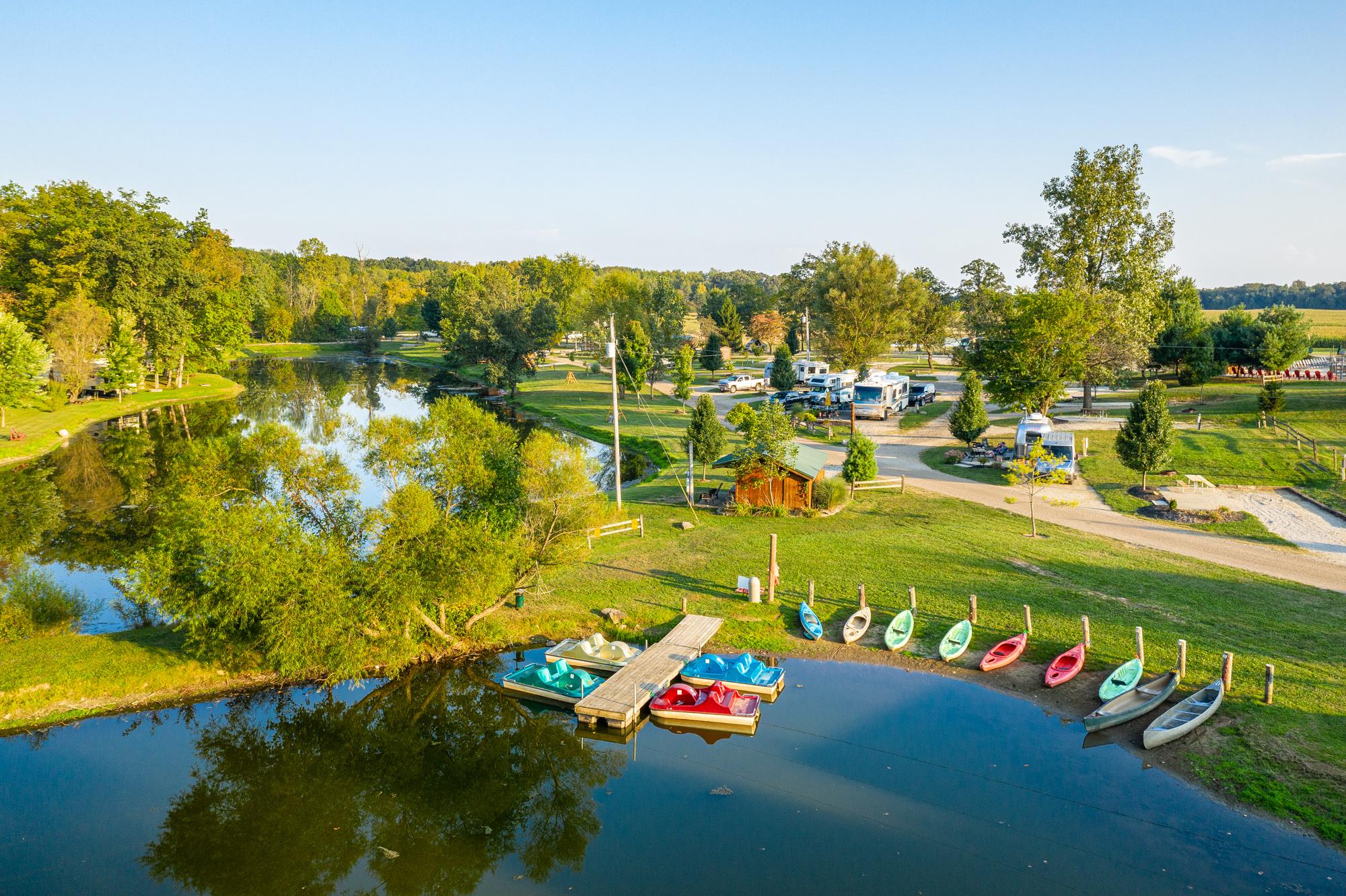
On July 8, Woodall’s Campground Magazine reported the sale of Cypress Landing RV Park & Lakeside Club, a 70-site waterfront property on approximately 30 acres along Gantt Lake in southern Alabama. The property combines existing operations with recreational amenities and potential opportunities for improvement and expansion.
Reporting distinction: Both transactions were discussed publicly during July, but should not be characterized as newly closed July transactions without confirming their closing dates.
2. RV Industry Indicators
The RV Industry Association’s June shipment results, reported July 27, provided an updated perspective on the broader recreational vehicle market.
| Indicator | June 2026 |
|---|---|
| Wholesale RV shipments | 25,484 |
| Year-over-year change | −13.1% |
| Park model RV shipments | 433 (+25.5% year over year) |
While overall RV shipments declined, park model RV shipments increased. Park models can offer an alternative accommodation strategy for certain campground and resort operators, but financial feasibility depends on development costs, regulations, occupancy, achievable nightly rates, and operating expenses.
Source: RV Industry Association (June 2026 shipment report, released July 2026).
3. Campground Operations and Summer Demand
July represents an important period for many seasonal campgrounds, particularly those serving family vacations, national parks, lakes, and other recreational destinations. Peak-season operating results provide valuable information about revenue potential, pricing power, and guest behavior.
Operating indicators worth monitoring
- Occupancy: Weekday versus weekend performance, including holiday demand.
- Revenue: Average daily rates, seasonal rates, and revenue per available site.
- Guest mix: Transient RVs, extended stays, cabins, park models, and glamping accommodations.
- Ancillary revenue: Equipment rentals, retail, food service, and recreational amenities.
- Expenses: Staffing, utilities, insurance, maintenance, and property taxes.
4. Manufactured Housing and Financing Considerations
Manufactured housing communities and extended-stay RV parks can share certain investment characteristics, including recurring site revenue and infrastructure-intensive operations. However, tenant relationships, regulations, expense structures, and financing options may differ significantly.
Evaluating acquisition financing
Key underwriting considerations include loan-to-value ratios, debt-service coverage, interest-rate assumptions, loan maturities, and required capital improvements. Properties requiring infrastructure upgrades or substantial lease-up may be evaluated differently from stabilized communities with documented collections.
5. Expansion Opportunities: RV Sites, Cabins and Glamping
Properties with excess land may offer opportunities to add RV sites, cabins, park models, or glamping accommodations. However, acreage alone does not establish development feasibility. Owners should evaluate zoning, utility capacity, wastewater systems, drainage, access, environmental restrictions, and demand for additional accommodations.
6. July Investment Outlook
July market reporting illustrates continued interest in outdoor hospitality properties offering identifiable demand drivers, particularly established recreational destinations and waterfront locations. At the same time, declining RV wholesale shipments reinforced the importance of separating broad industry indicators from the financial performance of individual parks.
For sellers, accurate operating records and clear documentation of infrastructure and improvements can help buyers assess value. For buyers, disciplined underwriting remains essential, particularly when an acquisition includes anticipated operating improvements or future development.
Considering Buying or Selling an RV Park or Campground?
Park Brokerage Services works with independent owners, private investors, operators, and institutional groups evaluating RV parks, campgrounds, manufactured housing communities, and outdoor hospitality investments.
Expert Guidance for RV Parks, Campgrounds & Outdoor Hospitality Assets.
This report is provided for general market information. Publicly reported transactions may have been announced in a different month from closing. Illustrative images do not depict the named transaction properties. PBS investment observations are qualitative analysis, not property-specific valuations.